

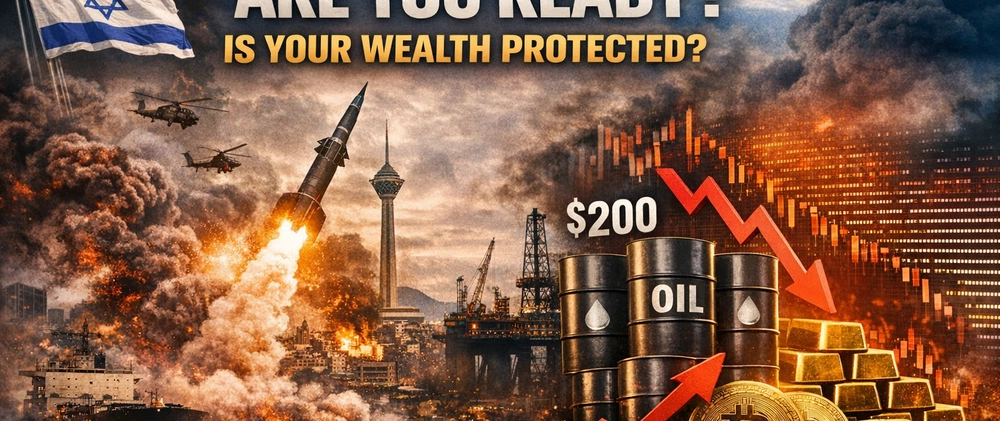
Reports of military action involving the US, Israel, and Iran are creating uncertainty in global markets. Whether this becomes a long conflict or calms down through talks, one thing is clear:
War not only affects soldiers, but it also affects money and markets.
A large share of the world’s oil passes through the Strait of Hormuz. If that route is disrupted, oil prices can rise fast. When oil becomes expensive, transportation costs rise, production costs rise, and everyday goods become more expensive. That leads to inflation.
When countries go to war, government spending increases sharply. In many cases, this leads to printing more money, which reduces purchasing power. Savings lose value. Investments become more volatile.
So the question is not whether global conflict affects the economy. It does.
The real question is whether people and businesses are ready for market ups and downs.
In uncertain times, it helps to focus on:
• Diversifying investments
• Holding some hard assets
• Managing risk carefully
• Not keeping all wealth in cash
Uncertain times test financial strength. Those who prepare tend to handle shocks better.
This is not about fear. It is about being ready. During global tension, smart positioning matters more than emotional reactions.
Stay informed. Stay calm. Make decisions based on facts, not panic.